
Search Colbert County Genealogy Records
Colbert County genealogy records date back to 1867 when the county was formed from Franklin County. The county seat is Tuscumbia, one of the oldest towns in north Alabama. Colbert County is part of the Shoals area, which also includes Lauderdale, Lawrence, and parts of Franklin County. The region has deep roots in early Alabama settlement, and many families have lived here for generations. The Colbert County Probate Court holds marriage records, wills, and estate files. The county health department can issue certified copies of birth, death, and marriage records through the state ViSION system. Family researchers will find records going back over 150 years at local offices.
Colbert County Quick Facts
What Genealogy Records Are Available
Colbert County has a good range of records for family history work. The county formed in 1867, so local records start from that year. State vital records begin in 1908. This means birth and death records from before 1908 must be found through other sources like church files or family papers.
Types of genealogy records you can find:
- Birth records from 1908 to present
- Death records from 1908 to present
- Marriage records from 1867 to present
- Divorce records from Circuit Court
- Probate and estate files from 1867
- Land and deed records
- Tax records and voter rolls
- Court case files
The probate court has marriage records going back to 1867. These are public records that anyone can request. Will and estate files are also at the probate court. Land deeds show property transfers over time. All of these help trace family lines and prove where ancestors lived.
For older vital records, you must look beyond county offices. Church records often have baptism, marriage, and burial dates. Cemetery records list death dates and sometimes family ties. The Alabama Department of Archives and History in Montgomery holds many old records that do not exist at the local level.
Colbert County Probate Court
The Colbert County Probate Court is the main office for genealogy records. The court keeps marriage licenses, wills, and estate files. The probate judge also handles adoptions and mental health matters. In Alabama, the probate judge serves as the head of county government.
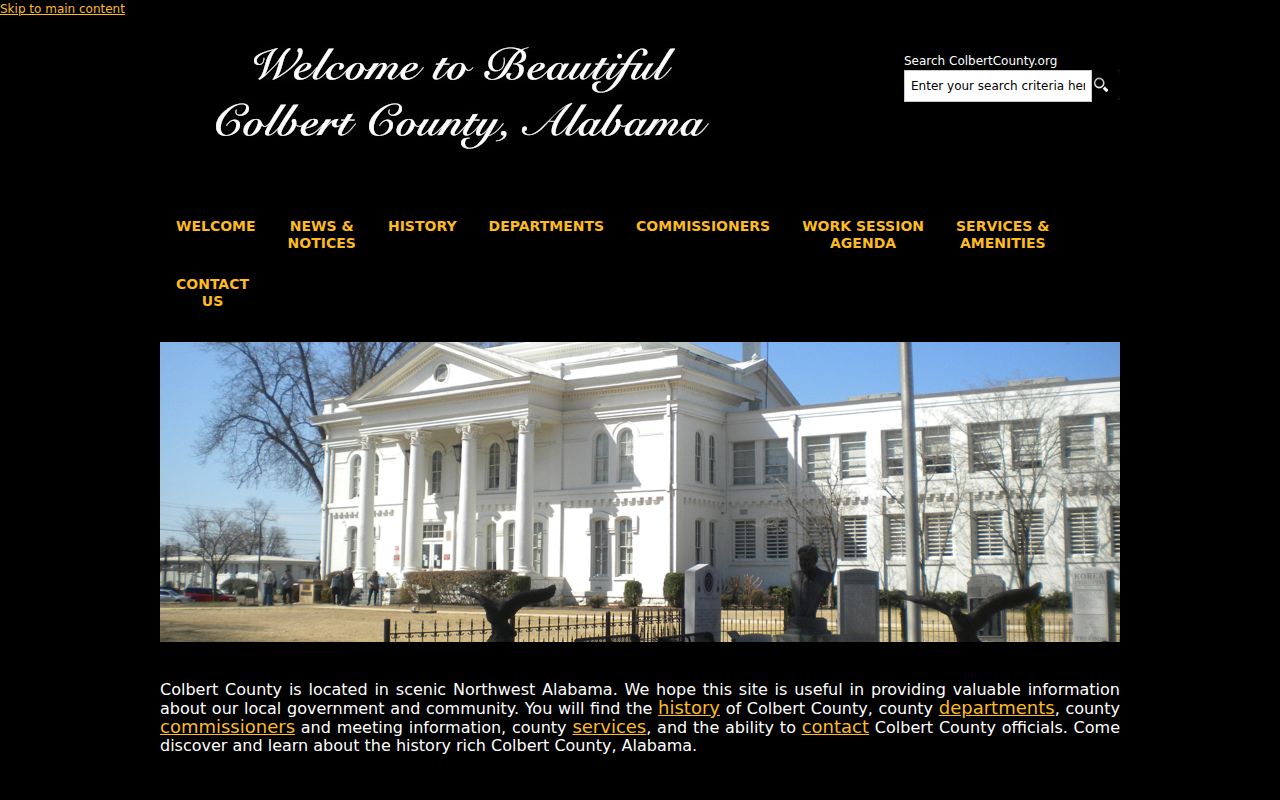
Marriage records at the probate court go back to 1867 when the county formed. These records are public. You do not need to prove family ties to get a copy. The court has indexes that help staff find what you need. You can visit in person or send a mail request.
| Address |
Colbert County Courthouse 201 North Main Street Tuscumbia, AL 35674 |
|---|---|
| Phone | (256) 386-8516 |
| Hours | Monday through Friday, 8:00 AM to 4:30 PM |
Probate files contain wills, estate inventories, and heir lists. When someone died owning property, the probate court handled the estate. These files often name all children and can prove family links. They show how property passed from one generation to the next. This makes them a valuable source for tracing family lines.
The probate court also keeps guardianship records. These show when a minor child or disabled adult had a guardian appointed. The records often include family details and property information. Land records at the probate court show deeds, mortgages, and property transfers over time.
Colbert County Health Department
The Colbert County Health Department issues certified copies of vital records. Through the ViSION network, they can access any Alabama birth, death, marriage, or divorce record. You do not have to visit the county where the event took place. Any county health office in Alabama can pull records from the state system.
State vital records start in 1908. Before that year, Alabama did not keep birth and death records at the state level. For events before 1908, you must use other sources. Church records, family bibles, and cemetery logs are the main options.
| Address |
Colbert County Health Department 1000 South Jackson Highway Sheffield, AL 35660 |
|---|---|
| Phone | (256) 383-1231 |
| Hours | Monday through Friday, 8:00 AM to 4:30 PM |
Birth records less than 125 years old have access limits. Only the person named, a parent, or a legal guardian can get a copy. Death records less than 25 years old also have limits. After these time periods pass, the records become open to all for genealogy work.
Walk-in service is often same day. Staff search the state database and print your record while you wait. You must bring a valid ID and know the basic details of the record you need. If you are not the person named on the record, bring proof of your right to access it.
Colbert County Circuit Court
Colbert County is part of the 3rd Judicial Circuit. The circuit court handles divorce cases, civil suits, and criminal matters. For genealogy, divorce records are the main item of interest. The circuit clerk keeps case files for all divorces filed in the county.
State divorce records start in 1950. The county has older divorce files in the circuit clerk's office. These records can show marriage dates, children's names, and property details. Divorce files sometimes include more family data than marriage records do.
| Address |
Colbert County Circuit Clerk 201 North Main Street Tuscumbia, AL 35674 |
|---|---|
| Phone | (256) 386-8530 |
| Hours | Monday through Friday, 8:00 AM to 4:30 PM |
Court case files from the circuit court can help with family research. Civil cases might show disputes over land or estates. These files often include depositions and witness statements that name family members and neighbors. Criminal cases are less useful for genealogy but sometimes contain personal details.
The Shoals Area
Colbert County is part of the Shoals area in northwest Alabama. The Shoals includes the cities of Florence, Sheffield, Tuscumbia, and Muscle Shoals. These four cities share a common history tied to the Tennessee River. Families in this region often had ties across county lines.
Florence is in Lauderdale County just across the river. Many Colbert County families had relatives there. If you cannot find a record in Colbert County, check Lauderdale County too. The same is true for Franklin and Lawrence counties, which also border Colbert.
The area was settled early in Alabama history. Tuscumbia was founded in 1820. The Tennessee River made the region important for trade and travel. This long history means deep family roots and many generations to research.
Helen Keller Birthplace
Colbert County is famous as the birthplace of Helen Keller. She was born in Tuscumbia in 1880. Her home, Ivy Green, is now a museum and National Historic Landmark. While this is not directly about genealogy records, researchers tracing the Keller family will find local resources helpful.
The Keller family was well known in the area. Records of their land, marriages, and estates are at the probate court. Local history books and newspaper archives also cover the family. The Alabama Department of Archives and History has materials on Helen Keller and her family.
Online Research Resources
Several websites help with Colbert County genealogy. Free and paid options exist. Start with the free sources before paying for subscriptions.
- FamilySearch has free census, church, and vital records
- Alabama Digital Archives has newspapers and government files
- AlacourtAccess lets you search court records online
- Ancestry has indexed records with a subscription
- Find A Grave has cemetery photos and burial info
FamilySearch is run by the Church of Jesus Christ of Latter-day Saints. It is free to use. They have indexed millions of records from Alabama. Census records, some church records, and state vital records are all there. Create a free account to access everything.
The Alabama Department of Archives and History has a digital collection online. Their site has old newspapers, photos, maps, and government records. Some Colbert County records may be in their collections.
AlacourtAccess covers court records from all 67 Alabama counties. You can search by name or case number. This is a good way to find divorce records, civil suits, and criminal cases from Colbert County.
Alternative Research Sources
When county records do not have what you need, other sources can help. These options work well for events before 1908 when the state started keeping vital records.
Federal Census Records
Federal census records are key to tracing families over time. The census was taken every ten years. Colbert County appears in census records from 1870 forward since the county formed in 1867. The 1870, 1880, 1900, 1910, and later census records list each person by name. They show ages, birthplaces, and jobs.
Census records are free at FamilySearch.org and at the Alabama Department of Archives and History. They prove when families lived in the county and help connect generations.
Church Records
Church records fill gaps when civil records are missing. Many Colbert County churches kept their own books. These include baptism dates, marriage notes, death records, and membership lists. Baptist and Methodist churches were common in the area.
Some church records have been copied and indexed. The Alabama Department of Archives has a collection of church record transcripts. If you know which church your family attended, contact that congregation. Some old church books are still held by active churches today.
Cemetery Records
Cemetery records can fill in gaps when other records are missing. A tombstone may be the only record of a birth or death date. Colbert County has many old cemeteries. Some date back to the early days of settlement.
Find A Grave and BillionGraves are two websites with cemetery data. Volunteers photograph tombstones and upload the info. Search these sites by name to find burial locations and dates. Many Colbert County cemeteries have been documented this way.
In-Person Research Tips
A visit to Tuscumbia can help your research. Staff at the probate court can guide you to records that are not online. You can view original documents and take notes. Bring a notebook, ID, and any information you already have about your family.
The Tuscumbia Public Library has local history materials. They hold books, maps, and files on Colbert County families. Library staff may know about resources you would not find on your own. The library also offers free internet access for online research.
The Alabama Department of Archives and History in Montgomery is worth a trip if you hit a wall. Their research room has the best collection of old Alabama records in the state. Staff can help you find census records, military files, and land grants. The drive from Tuscumbia takes about two hours.
The Florence-Lauderdale Public Library across the river has a strong genealogy section. Since Colbert and Lauderdale counties share the Shoals area, families often appear in records from both places. The library has old newspapers on microfilm and local history books.
Getting Research Help
Local genealogy groups can speed up your search. The Shoals area has active researchers who share tips and knowledge. Joining a local group connects you with people who know the families and records of the region.
If you hit a wall, consider hiring a professional. Genealogists who know Alabama records can find sources you might miss. The Alabama Genealogical Society keeps a list of researchers. Some focus on northwest Alabama counties like Colbert.
Online forums are another option. Sites like RootsWeb and GenForum have boards for Colbert County. Post a question about your family and see if anyone has info to share. Other researchers may have already found the records you need.
Cities in Colbert County
Colbert County has several cities and towns. None have populations over 50,000. All use the Colbert County Probate Court for marriage records and the county health department for vital records. Tuscumbia is the county seat.
Cities and towns in Colbert County include Tuscumbia, Sheffield, Muscle Shoals, Leighton, Littleville, and Cherokee. Residents of all these places file records at the county offices in Tuscumbia. The health department office is in Sheffield.
Nearby Counties
These counties border Colbert County. If your family lived near a county line, check records in both places. Some families moved between counties over time. An ancestor may appear in a different county than you expect.