
Find Genealogy Records in Covington County
Covington County genealogy records provide a window into family history in south Alabama near the Florida border. The county was created in 1821 from Henry County, making it one of the older counties in the state. Andalusia serves as the county seat and houses all county records. The Covington County Probate Court maintains marriage licenses, wills, estate files, and land deeds going back to the county's formation. Unlike many Alabama counties, Covington never lost records to a courthouse fire. This means researchers can trace families from the 1820s through today using local documents. The county is part of the 22nd Judicial Circuit, and the circuit court holds divorce and civil case files dating back many decades.
Covington County Quick Facts
Covington County Probate Court
The probate court is the heart of genealogy research in Covington County. Located in the courthouse in Andalusia, this office keeps the oldest and most important family records. Staff members are helpful and used to working with genealogy researchers who come from near and far.
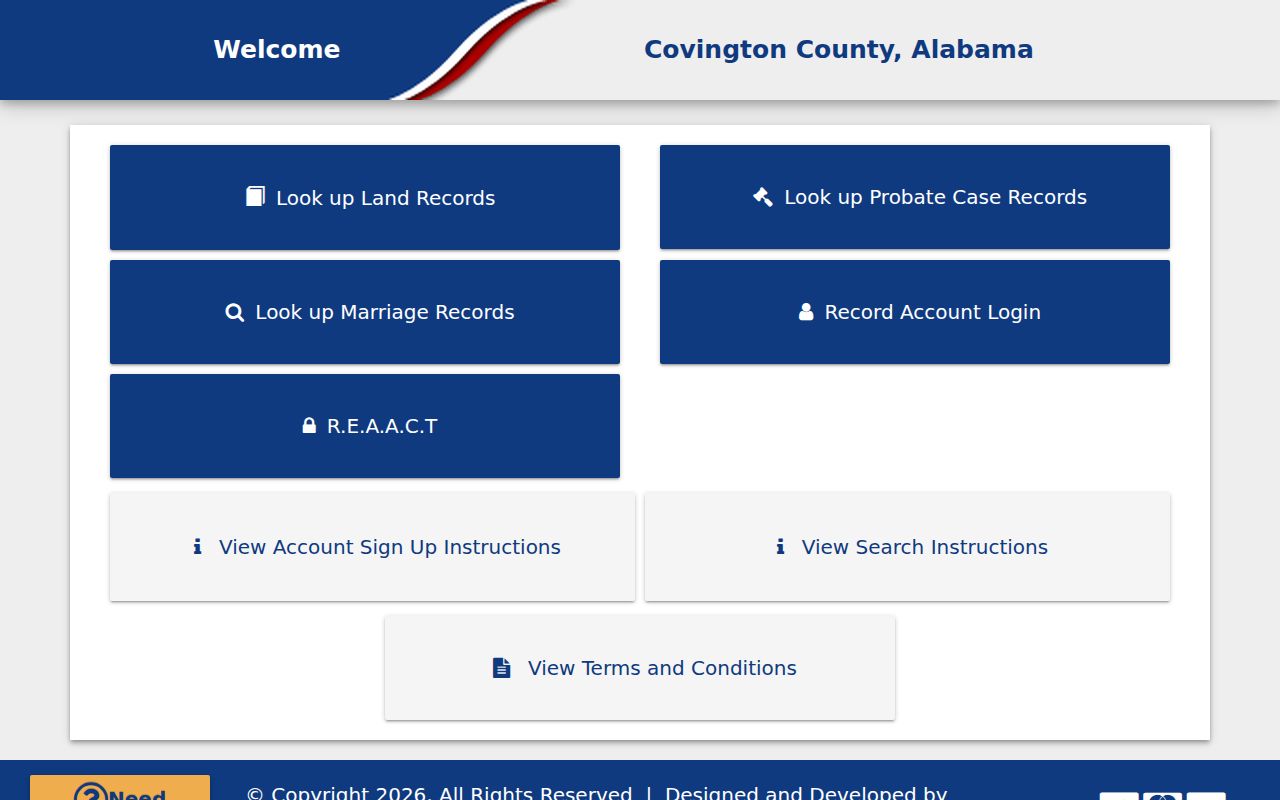
Marriage records are a main draw. The probate court has marriage licenses from 1821 to the present day. These records show names of both parties, the date of the license, and often the names of witnesses. Early records may include consent forms from parents when one party was under age. Marriage bonds from the 1800s can name the bride's father or another family member who posted the bond.
Wills and probate files are also here. When someone died owning property, the estate went through probate. The court file might include the will itself, an inventory of belongings, sale bills from estate auctions, and final settlements listing heirs. These papers name family members and show who got what. They are gold for genealogy work.
Land records round out the collection. Deeds show who bought and sold land in the county. They list legal descriptions, prices, and the names of buyers and sellers. Some deeds mention family ties, like when a son bought land from his father. The probate office has deed books going back to the 1820s.
| Address |
Covington County Courthouse 1 Court Square Andalusia, AL 36420 |
|---|---|
| Phone | (334) 428-2510 |
| Hours | Monday through Friday, 8:00 AM to 4:30 PM |
You can visit in person to search records. Call ahead to make sure staff will be available to help. Bring identification and any information you have about the family you are researching. The more details you can provide, the faster the search will go. Staff can pull record books and let you look through them in the office.
Covington County Health Department
The Covington County Health Department handles vital records. Birth and death certificates from 1908 forward are available here. Through the ViSION network, staff can access records from any Alabama county. You do not need to travel to where the event took place.
Alabama did not require vital records registration before 1908. For births and deaths before that year, you must use other sources. Church records, cemetery logs, and family bibles are the best bets. Some newspapers printed birth and death notices that can fill in the gaps.
Access rules apply to recent records. Birth certificates less than 125 years old have restrictions. Only the person named, a parent, a legal guardian, or someone with a court order can get a certified copy. Death records less than 25 years old have similar rules. After these periods, records open up for general genealogy research.
| Address |
Covington County Health Department 1115 Elba Highway Andalusia, AL 36420 |
|---|---|
| Phone | (334) 222-1175 |
| Hours | Monday through Friday, 8:00 AM to 4:30 PM |
Walk-in requests usually get same-day service. Bring a photo ID and know what record you need. Include the full name, approximate date, and place of the event. Staff will search the database and print the certificate while you wait. Mail requests take longer but work if you cannot visit in person.
Covington County Circuit Court
The circuit court handles civil and criminal cases. Covington County is part of the 22nd Judicial Circuit. For genealogy purposes, divorce records and civil suits are the most useful documents here.
Divorce case files can reveal a lot about families. They may list the names and ages of children, the date and place of marriage, property owned by the couple, and reasons for the split. Alabama started central divorce records in 1950, but local circuit courts have files going back much further. The full case file at the circuit court has more detail than the state index.
Civil lawsuits sometimes involve family matters too. Disputes over land, estates, or contracts might name multiple family members. Searching the civil case index by surname can turn up unexpected finds. Criminal records are less useful for genealogy but can confirm a person's presence in the county at a certain time.
You can search some court records online through Alacourt. The site at pa.alacourt.com lets you look up case information by name or case number. Basic searches are free. You can see case type, filing date, and party names. For full documents, contact the circuit clerk or visit in person.
| Address |
Covington County Circuit Clerk 1 Court Square Andalusia, AL 36420 |
|---|---|
| Phone | (334) 428-2520 |
| Hours | Monday through Friday, 8:00 AM to 4:30 PM |
Early Covington County Records
Covington County has a strong collection of early records. The county escaped the courthouse fires that hit so many Alabama counties in the 1800s. This means records from the 1820s survive today. Researchers looking for early settlers have good options.
The earliest marriage records date to the 1820s. These show who was forming families in the new county. Early marriages often involved families who had moved together from other states. Seeing the same surnames among witnesses can point to family connections.
Land records from the early years are also intact. The federal government sold land in Covington County starting in the 1820s. Original land patents are at the Bureau of Land Management's online database. Once land was in private hands, later sales show up in county deed books. You can trace a piece of land through multiple owners over the decades.
Tax lists and voter rolls from the 1800s survive in some form. These records list heads of household and can prove someone lived in the county at a certain time. The Alabama Department of Archives and History has copies of some early Covington County tax records. They are indexed and searchable at the archives research room in Montgomery.
Estate files from the 1800s are a rich source. When someone died, the probate court handled their property. Files can include wills, inventories, sale bills, and final settlements. An inventory might list farm animals, furniture, tools, and even the names of enslaved persons in pre-Civil War estates. These details paint a picture of daily life.
Census and Federal Records
Federal census records are a backbone of Covington County research. The U.S. Census counted everyone in the county every ten years. Covington County appears in censuses from 1830 through the present. The 1850 and later censuses list each person by name.
Census records show who lived where and when. They list names, ages, birthplaces, and occupations. The 1850 census was the first to ask where each person was born. This helps trace where families came from before they moved to Alabama. Later censuses added questions about parents' birthplaces, which can point you to the previous generation.
Special census schedules add more detail. Agricultural schedules list farms, crops, and livestock. Mortality schedules list people who died in the year before the census. These are separate from the regular population schedules but cover the same households. The Alabama Department of Archives has copies of many special schedules.
Military records are another federal source. Many Covington County men served in the Confederate Army during the Civil War. Service records and pension applications are at the National Archives. The Alabama Department of Archives has state copies of Confederate records. Pension applications often list family members and can prove relationships when local records are thin.
Federal land records document the first sales of public land. The Bureau of Land Management has an online database of land patents. Search by county to see who bought land directly from the government. These records are free and show the original settler in many cases.
Alternative Research Sources
Beyond government records, other sources help with Covington County genealogy. Church records, cemetery data, and newspapers can fill in gaps and add detail to your family story.
Church Records
Churches kept their own records long before the state required vital registration. Baptist and Methodist congregations were common in Covington County. Church books might include baptism dates, marriage records, death notices, and membership rolls. Some churches still have old record books. Contact congregations directly to ask what they hold.
The Alabama Baptist Historical Society has records from Baptist churches across the state. Some Covington County church records have been microfilmed by FamilySearch. Check their catalog to see what is available. Local libraries may have copies of church history books that include member lists.
Cemetery Records
Cemeteries are outdoor archives. Gravestones give birth and death dates that may not appear elsewhere. Family plots group relatives together, showing who was connected to whom. Some stones list birthplaces or relationships, like "wife of" or "daughter of."
Find A Grave and BillionGraves have volunteer-submitted photos and data from Covington County cemeteries. Search these free sites by name or location. The Covington County Historical Society has compiled cemetery transcriptions over the years. Local genealogy groups sometimes have unpublished lists.
Newspaper Archives
Old newspapers printed news that is now genealogy gold. Birth and marriage announcements, obituaries, legal notices, and local news items mention names and dates. The Andalusia Star-News is the main local paper. Older issues may be on microfilm at the library or digitized online.
The Alabama Department of Archives has digitized many historical newspapers. Search their collection at digital.archives.alabama.gov. Chronicling America at the Library of Congress also has free access to old Alabama papers. Search by name and Covington County to see what comes up.
Online Resources
Several websites have Covington County genealogy records. Many are free. Some require subscriptions. Here are the key sites to check for your research.
FamilySearch at familysearch.org is free to use. They have indexed census records, some vital records, and church records from Alabama. Create a free account to access everything. Their wiki has research guides specific to Alabama counties.
The Alabama Department of Archives and History has a digital collection at digital.archives.alabama.gov. Browse newspapers, photographs, maps, and government documents. Search for Covington County to see what is available. Some records are fully digitized and viewable online.
Ancestry at ancestry.com has a large Alabama collection. A subscription is required, but many public libraries offer free access. Check with the Covington County Public Library System about using Ancestry from their computers.
Find A Grave at findagrave.com has cemetery data from around the county. Volunteers photograph gravestones and upload the information. It is free to search and use.
USGenWeb has volunteer pages for each county. The Covington County page may have transcribed records, lookup requests, and queries from other researchers. Check usgenweb.org and navigate to Alabama and Covington County.
In-Person Research
Visiting Covington County lets you access records that are not online. Staff can guide you to sources you might miss. A trip to Andalusia is worth the effort for serious research.
The courthouse is in downtown Andalusia. Both the probate court and circuit clerk are in the building. Arrive early for the best service. Bring a notebook, pencil, and your research notes. Photo ID is required for some records. Staff can pull books and files for you to review.
The Covington County Public Library has local history materials. They may have family files, local histories, and genealogy reference books. The library also provides free internet access for online research. Call ahead to ask about their collection and hours.
The Alabama Department of Archives and History in Montgomery is about two hours north. Their research room holds the best collection of Alabama records in the state. They have census records, military files, land grants, and much more. Plan to spend a full day if you visit. Staff can help you find what you need.
The Andalusia Area Chamber of Commerce can provide local information if you are planning a research trip. They can point you to lodging, restaurants, and other services. Andalusia is a small city with the basics for visitors doing research.
Getting Research Help
Genealogy research can hit walls. When you get stuck, help is available from societies, professionals, and online communities.
The Covington Historical Society works on local history and genealogy. Members know the county records and can share tips. Joining a local group connects you with people who have been researching in the area for years. They may have already found the records you need.
The Alabama Genealogical Society covers the whole state. They publish a journal with research articles and offer resources for members. The society maintains a list of professional researchers who specialize in Alabama. Consider hiring a pro if you need expert help.
Online forums and message boards connect researchers worldwide. Sites like RootsWeb and GenForum have threads for Covington County. Post a question about your family and see if anyone has information to share. Social media groups on Facebook also have active Alabama genealogy communities.
If you cannot visit in person, consider hiring a local researcher. Someone in Andalusia can visit the courthouse, pull records, and send you copies. The probate court may also respond to mail requests if you provide enough detail about what you need.
Cities and Towns in Covington County
Covington County has several towns and communities. None have populations over 50,000. All residents use the Covington County Probate Court in Andalusia for marriage licenses and the county health department for vital records.
Major communities in Covington County include Andalusia, Opp, Florala, Red Level, and River Falls. Andalusia is the county seat and the largest city. Opp is the second largest town. Florala sits on the Florida state line. All genealogy records are centralized at the county offices in Andalusia.
Nearby Counties
These counties border Covington County. If your family lived near a county line, check records in both places. Families moved between counties over time. An ancestor might appear in a neighboring county's records.