
Search Dallas County Genealogy Records
Dallas County genealogy records date back to 1818 when the county was created from land ceded by the Creek Nation. The county seat is Selma, a city known for its role in the civil rights movement. Dallas County sits in the Black Belt region of Alabama, named for its rich dark soil. The Dallas County Probate Court and the Dallas County Health Department are the main sources for birth, death, and marriage records. This county is in the 4th Judicial Circuit. Many families have roots here going back to the early days of Alabama statehood, and the records reflect that deep history.
Dallas County Quick Facts
What Records Are Available
Dallas County has a wide range of genealogy records for family history research. Birth and death records from the state start in 1908. Marriage records at the probate court go back to the early 1800s. The county also has land deeds, estate files, and court records. Some older records have gaps due to the passage of time, but many survive in good shape.
Types of genealogy records you can find:
- Birth records from 1908 to present
- Death records from 1908 to present
- Marriage records from 1818 to present
- Divorce records from Circuit Court
- Probate and estate files
- Land and deed records
- Tax records and voter rolls
- Court case files
- Confederate pension records
Older birth and death records before 1908 are harder to find. The state did not keep these records back then. You may need to check church records, cemetery logs, or family bibles for births and deaths from that era. Some old records are held at the Alabama Department of Archives and History in Montgomery.
Dallas County Probate Court
The Dallas County Probate Court is a key source for genealogy research. The court keeps marriage records, will files, and estate records. They also handle adoptions and mental health matters. The probate judge is the head of county government in Alabama.
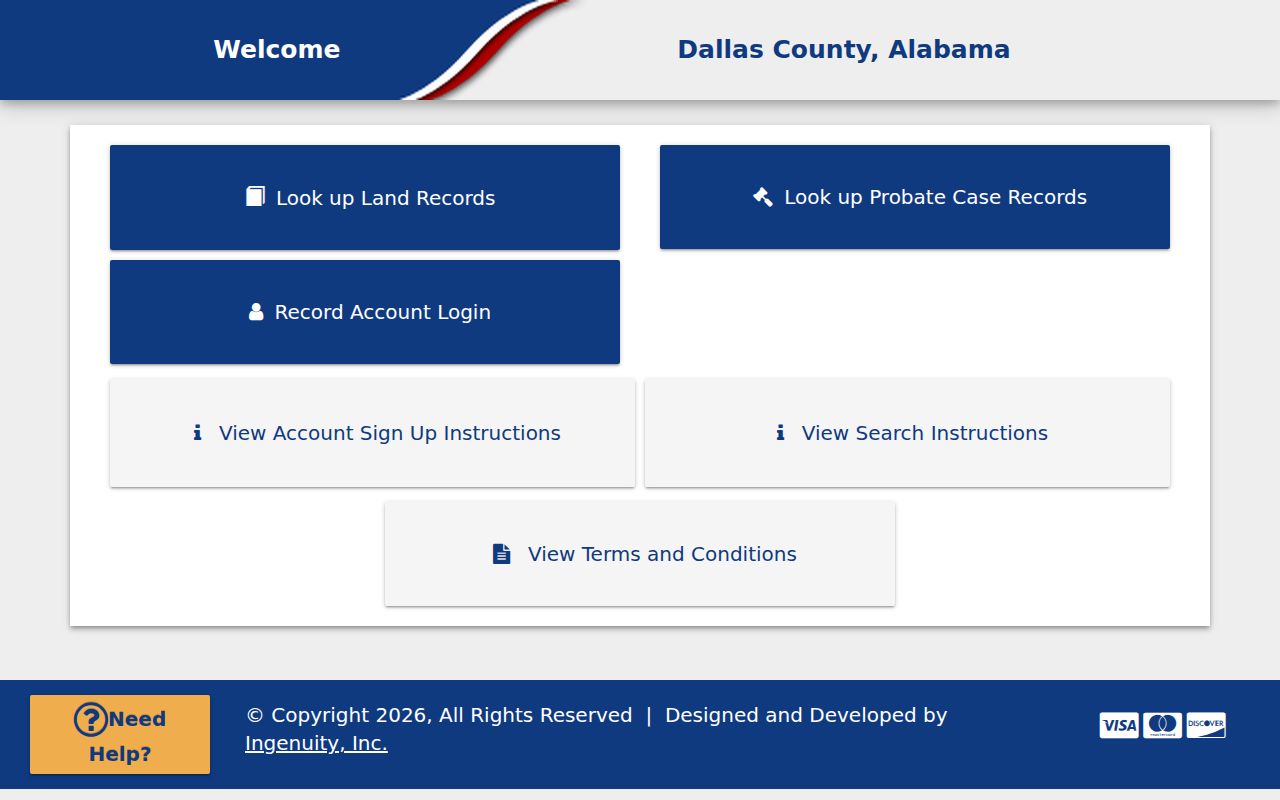
The probate court holds records going back to the formation of the county. Marriage records are among the most useful for genealogy work. They show names, dates, and sometimes ages and places of birth. The court also has wills and estate files that can reveal family links across generations.
Marriage records at the probate court are public. Anyone can ask for a copy. You do not need to prove a family link. This makes marriage records one of the best sources for genealogy work in Dallas County. The court has marriage indexes from 1818 to the present day.
| Address |
Dallas County Courthouse 105 Lauderdale Street Selma, AL 36701 |
|---|---|
| Phone | (334) 874-2516 |
| Hours | Monday through Friday, 8:00 AM to 4:30 PM |
The courthouse is in downtown Selma. Street parking is available nearby. Bring a valid ID when you visit. Staff can help you search the index and pull files for viewing. They are used to helping family history researchers and can point you in the right direction.
County Health Department
The Dallas County Health Department issues certified copies of vital records. Through the ViSION network, they can access any Alabama birth, death, marriage, or divorce record. You do not have to visit the county where the event took place. Any county health office in Alabama can pull records from the state system.
There are access rules for vital records. Birth records less than 125 years old have limits. Only the person named, a parent, or a legal guardian can get a copy. Death records less than 25 years old also have some limits. After these time periods pass, the records become open to all for genealogy use.
| Address |
Dallas County Health Department 1115 Church Street Selma, AL 36701 |
|---|---|
| Phone | (334) 874-2550 |
| Hours | Monday through Friday, 8:00 AM to 4:30 PM |
Walk-in service is often same day. Staff search the state database and print your record while you wait. You must bring a valid ID and know the details of the record you need. If you are not the person named on the record, bring proof of your right to access it. The office also takes mail requests.
How to Search Records
You have several ways to search genealogy records in Dallas County. Online searches work for basic lookups. In-person visits let you see full documents. Mail requests work when you know what you need. Each method has pros and cons.
Start with online resources to get a sense of what is out there. The Alabama Department of Archives has digitized many older records. FamilySearch has free indexes for Alabama records. These tools can help you find names and dates before you make a trip to Selma.
For vital records, you have three options:
- Visit the county health department in person
- Mail a request to the health department
- Order online through VitalChek
VitalChek is the state's online ordering partner. You can order birth, death, marriage, and divorce records at their website. They add a service fee on top of the state fee. Go to vitalchek.com or call 1-888-279-9888 to place an order. This is a fast way to get records if you cannot visit in person.
For probate court records, you will need to contact the court directly. Call ahead to ask about their search process. Staff can tell you what records they have and how to request copies. Some records may be in storage and need time to pull.
Online Access Options
Dallas County does not have as many online records as larger counties. But you can still find useful data through state and national databases. The Alabama Department of Archives has digitized many older county records. This is a good place to start your search.
Online resources for Dallas County genealogy:
- AlacourtAccess for court records at pa.alacourt.com
- Alabama Department of Archives digital collection at digital.archives.alabama.gov
- FamilySearch free records at familysearch.org
- Ancestry subscription database at ancestry.com
The Alabama Department of Archives and History has free digital records. These include old newspapers, photos, and government files. Many Dallas County records from the 1800s and early 1900s are in their collection. This is a good starting point for older family history research.
FamilySearch has free records with no subscription needed. They have indexed Alabama vital records, census data, and church records. Their collection grows all the time as volunteers add new data. Create a free account to access all their tools. You may find Dallas County records that have been indexed but not digitized elsewhere.
In-Person Access
Visiting in person is the best way to see full records. Staff can help you search and explain what is available. You may find things that do not show up in online indexes. Bring a notebook and a valid ID with you.
The Dallas County Probate Court is in the Selma courthouse. Go to the records room and ask for help. Staff can search the index and pull files for you to view. You can take notes or order copies. The courthouse has been in use for many years and holds a wealth of records.
The Selma-Dallas County Public Library has local history materials. They hold books on county history, old newspapers on microfilm, and some genealogy files. Staff know the local area and can point you to sources. The library is a good stop before or after a trip to the courthouse.
The Alabama Department of Archives and History in Montgomery is worth the trip. Their research room has the best collection of old Alabama records. Some Dallas County probate records from the 1800s are there. Staff can help you find what you need. The drive from Selma takes about 45 minutes, making it an easy day trip.
Black Belt Region Research
Dallas County is in the heart of the Black Belt region. This area gets its name from the rich dark soil, not from its population. But the soil made it prime cotton land in the 1800s. Large plantations dotted the county before the Civil War. Many enslaved people lived and worked here.
This history affects genealogy research. Records from the plantation era are uneven. Enslaved people were often listed only by first name in property records. After the war, Freedmen's Bureau records help fill in gaps. These records are at the National Archives and on FamilySearch.
Church records are another key source. Both Black and white congregations kept records of births, marriages, and deaths. Some of these are at the Alabama Department of Archives. Others remain with the churches themselves. Contact local churches to ask about their records.
The Selma area also has a strong oral history tradition. Families passed down stories across generations. If you have relatives in the area, talking to them may reveal details not found in any written record. Oral histories can point you toward records you might otherwise miss.
Civil Rights Era Records
Selma played a major role in the civil rights movement. The 1965 voting rights marches from Selma to Montgomery brought national attention. Many families in the area have connections to this era. While this is more recent history than typical genealogy, it matters to many researchers.
The National Voting Rights Museum in Selma has archives related to the movement. They hold photos, documents, and oral histories. If your family was involved in the movement, this is a place to check. The museum can help connect you with resources about that time.
Court records from the civil rights era are in the federal archives. The 4th Judicial Circuit court in Selma handled many local cases. Federal cases went to the U.S. District Court in Montgomery. These records show the legal battles of that time and may name family members who took part.
Local Genealogy Tips
Dallas County has some quirks that affect research. The county lost some records over the years, so gaps exist in certain time periods. Check multiple sources when one comes up empty. A record missing from the courthouse might be at the state archives or in church files.
Cemetery records are useful here. Old Dallas County has many historic cemeteries. Old Live Oak Cemetery in Selma dates to the 1800s. Smaller church and family cemeteries dot the rural areas. Tombstones can provide dates and family links not found elsewhere.
Land records tell family stories too. The county has deed books going back to its founding. These show who owned land and when it changed hands. Farm families often stayed on the same land for generations. Tracing land can help trace family lines.
The 4th Judicial Circuit covers Dallas County along with Wilcox County. Some court records may be indexed under the circuit rather than the county. Ask staff at the courthouse if you are having trouble finding a court case. They can explain how records are organized.
If your research involves families who moved away, track where they went. Many Dallas County families moved north during the Great Migration. Chicago, Detroit, and other cities drew people looking for work. Records in those cities may have information about Dallas County roots.
Cities in Dallas County
Dallas County has several cities and towns. All of them use the Dallas County Probate Court for marriage records and the county health department for vital records. Selma is the county seat and largest city.
Selma has a population of about 17,000 people. Other communities in Dallas County include Orrville, Valley Grande, and several smaller towns. All of these use the Dallas County offices for genealogy records. No cities in Dallas County meet the population threshold for their own dedicated page on this site.
Nearby Counties
These counties border Dallas County. If your family lived near the county line, check records in both places. County borders have changed over time, so an ancestor may appear in a different county than you expect.