
Find Genealogy Records in Fayette County
Fayette County genealogy records tell the story of families who settled in northwest Alabama since the county was formed in 1824. Researchers face a challenge here because multiple courthouse fires destroyed early documents. The first fire struck in 1866 during the post-Civil War period. Then a major blaze in 1911 swept through downtown Fayette and burned the courthouse along with much of the business district. Despite these losses, many records survive from the late 1800s forward. The probate court holds marriage records from 1866, land records from 1848, and birth records from 1884 to 1941. For events after 1908, the state vital records system fills in most gaps.
Fayette County Quick Facts
Courthouse Fires and Lost Records
Fayette County lost records in at least two major fires. The 1866 fire destroyed documents from the county's first four decades. Then in March 1911, a devastating fire swept through downtown Fayette. It started in a drug store early on a Friday morning. High winds spread the flames fast. By the time it was over, the courthouse was in ruins along with the jail, bank, newspaper office, and more than twenty businesses.
The 1911 fire was the third time a Fayette County courthouse had burned. Local papers reported that births, marriages, and other vital documents were lost again. However, not all was destroyed. The circuit clerk and sheriff managed to save their records. The probate records were thought to be safe in the vault, though the full extent of damage was not known until the vault could be opened.
After the fire, Fayette rebuilt with stricter rules. The town council required all new downtown buildings to be made of brick, stone, or concrete. The current courthouse was built in 1912 in the Neoclassical style. It still stands today as part of the Fayette County Courthouse Historic District, which was listed on the National Register of Historic Places in 1976.
What does this mean for your research? Records from before 1866 are likely gone unless they were filed at the state level or kept elsewhere. Some records from 1866 to 1911 may have survived in the vault or in other offices. Records from 1912 forward should be intact at the courthouse.
What Records Exist Today
Despite the fires, Fayette County has a good collection of genealogy records. The probate court is the main source. Here is what they hold:
- Marriage records from 1866 to present
- Land and property records from 1848 to present
- Birth records from 1884 to 1941 (county copies)
- Death records from 1899 to 1941 (county copies)
- Probate and estate files
- Wills and administrations
- Military discharge records from 1919
- Guardianship records
The fact that land records go back to 1848 is a big help. Land transfers can prove family ties and show where people lived. Even if other records burned, a deed might survive to document a family's presence in the county.
Birth and death records from the probate court cover a limited period. Alabama did not require statewide vital records until 1908. Some counties kept their own records before that. Fayette has birth records from 1884 and death records from 1899. These fill a gap that many Alabama counties lack.
Fayette County Probate Court
The probate court is your first stop for local genealogy research. The office is in the Fayette County Courthouse on Temple Avenue in downtown Fayette. Staff can help you search records and order copies.
| Address |
Fayette County Courthouse 113 North Temple Avenue Fayette, AL 35555 |
|---|---|
| Phone | (205) 932-4517 |
| Hours | Monday through Friday, 8:00 AM to 4:00 PM |
Marriage records are the most common request. In Alabama, marriage records are public. Anyone can ask for a copy without proving they are related. The court has indexes to help you find what you need. Just bring the names and an approximate date if you have it.
Probate files are rich sources for family research. When someone died owning property, their estate went through probate. The files may include a will, an inventory of belongings, lists of heirs, and records of how property was divided. These documents often name spouses, children, and other relatives. They show family connections that might not appear anywhere else.
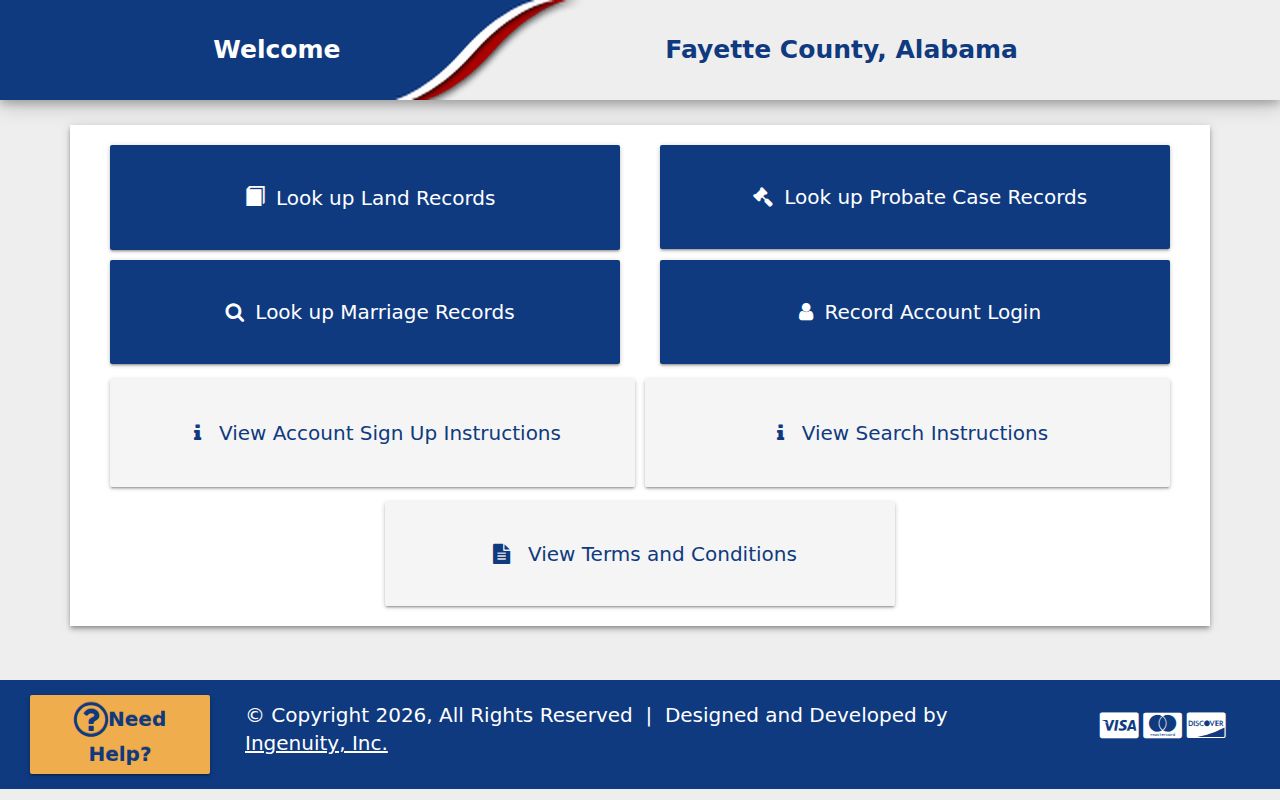
The probate court also offers online record searches. You can look up land records, probate cases, and marriage records from their website. This lets you do some research before you visit or call the office.
Fayette County Health Department
The Fayette County Health Department issues certified copies of vital records. Through the Alabama ViSION system, they can access birth, death, marriage, and divorce records from anywhere in the state. You do not need to go to the county where the event took place.
| Address |
Fayette County Health Department 215 1st Avenue NW Fayette, AL 35555 |
|---|---|
| Phone | (205) 932-5260 |
| Hours | Monday through Friday, 7:30 AM to 5:00 PM |
State vital records begin in 1908. For births and deaths before that year, you must use other sources. The county birth records from 1884 to 1941 held at the probate court can help. Church records, cemetery logs, and family bibles are also good for older vital events.
Access rules apply to recent records. Birth certificates less than 125 years old have limits. Only the person named, a parent, or someone with legal standing can get a certified copy. Death records less than 25 years old also have some limits. After these periods pass, the records open to anyone for genealogy research.
Most requests are filled same day if you go in person. Bring a valid photo ID and the details of the record you need. Staff will search the database and print your document while you wait. If you cannot visit, you can order online through VitalChek or request by mail from the Alabama Department of Public Health.
Fayette County Circuit Court
The Fayette County Circuit Court handles civil and criminal cases. It is part of the 24th Judicial Circuit, which also covers Lamar and Pickens counties. The circuit court is where you find divorce records, civil lawsuits, and criminal case files.
Divorce records are useful for genealogy. They can show maiden names, ages, children, and property. Alabama keeps divorce records at both the circuit court and in the state vital records system. The court has the full case files with all the details. The health department has a basic index.
| Address |
Fayette County Circuit Clerk 113 Temple Avenue Fayette, AL 35555 |
|---|---|
| Phone | (205) 932-4610 |
| Hours | Monday through Friday, 8:00 AM to 4:00 PM |
You can search court records online through Alacourt. Go to pa.alacourt.com and select Fayette County. The system shows case index information. For full documents, you must contact the clerk or visit in person. There is a small fee for online searches and for copies.
Alternative Research Sources
When courthouse records are gone, you must look elsewhere. Fayette County researchers have several good options. These sources help fill the gaps left by the fires.
Federal Census Records
Federal census records are key for pre-fire research. The census was taken every ten years. Fayette County appears in the 1830, 1840, 1850, 1860, and 1870 census rolls. The 1850 and later census records list each person by name with ages, birthplaces, and occupations. Earlier census records only name the head of household.
These records prove who lived in Fayette County and when. Even if no local document survives, the census shows your ancestor was there. Census records are free at FamilySearch.org and at the Alabama Department of Archives and History. Ancestry also has indexed census records with a subscription.
Church Records
Church records fill vital gaps when civil records are missing. Many Fayette County churches kept their own books. These might include baptism dates, marriage notes, death records, and membership lists. Baptist and Methodist churches were common in the area.
Some church records have been copied and indexed. The Alabama Department of Archives has a collection of church record transcripts. Local libraries may have more. If you know which church your family attended, contact that congregation directly. Some old record books are still held by active churches today.
Cemetery Records
Cemeteries tell stories when paper records fail. A tombstone may be the only record of a birth or death date. Fayette County has many old cemeteries. Some date back to before the courthouse fires.
Find A Grave and BillionGraves are two websites with cemetery data. Volunteers photograph tombstones and upload the information. Search these sites by name to find burial locations and dates. Many Fayette County cemeteries have been documented this way.
Military Records
Military records survive when local records do not. Many Fayette County men served in the Civil War. Service records, pension files, and veterans rolls list names and home counties. Confederate records are at the Alabama Department of Archives. Union records are at the National Archives.
Pension applications are especially useful. A widow applying for a pension might list her marriage date, children, and the soldier's birth and death dates. These details can stand in for lost civil records.
Online Research Resources
Several websites help with Fayette County genealogy. Free and paid options exist. Start with the free sources before paying for subscriptions.
- FamilySearch has free census, church, and vital records
- Alabama Digital Archives has newspapers and government files
- AlacourtAccess lets you search court records online
- Ancestry has indexed records with a subscription
- Find A Grave has cemetery photos and burial info
FamilySearch is run by the Church of Jesus Christ of Latter-day Saints. It is free to use. They have indexed millions of records from Alabama. Their Fayette County collection includes probate records from 1809 to 1985, estate files from 1830 to 1976, bond records from 1844 to 1863, and will records from 1860 to 1934. Create a free account to access everything.
The Alabama Department of Archives and History has a digital collection online. Their site has old newspapers, photos, maps, and government records. Search for Fayette County to see what is available. Old newspapers often have birth, marriage, and death notices that fill in for lost records.
In-Person Research Tips
A visit to Fayette can help your research. Staff at the probate court can guide you to records that are not online. You can view original documents and take notes. Bring a notebook, ID, and any information you already have about your family.
The Fayette County Public Library has local history materials. They may have books and files not found elsewhere. The library can also provide access to databases like Ancestry. Call ahead to confirm hours and what is available.
The Alabama Department of Archives and History in Montgomery is worth a trip. Their research room has the best collection of old Alabama records in the state. Staff can help you find census records, military files, and land grants. The drive from Fayette takes about two and a half hours.
The University of Alabama library in Tuscaloosa is closer, about an hour away. They have Alabama history materials and genealogy resources. The Gorgas House on campus also holds some historical records. Tuscaloosa is a good side trip if you are doing research in the area.
Getting Research Help
If you hit a wall in your research, help is available. Local genealogists know the records and can point you in the right direction.
The Alabama Genealogical Society keeps a list of researchers who work in the state. Some specialize in counties with record loss like Fayette. Hiring a professional can save time, especially if you cannot visit in person.
Online forums are another option. Sites like RootsWeb and GenForum have boards for Alabama and for specific counties. Post a question about your family and see if anyone has information to share. Other researchers may have already found the records you need or might be working on the same family lines.
FamilySearch also offers free research consultations. Their volunteers can help you plan your search and point you to sources you might have missed. Contact them through the FamilySearch website or visit a local FamilySearch center.
Cities in Fayette County
Fayette County has several towns and cities. None have populations over 50,000. All use the Fayette County Probate Court for marriage records and the county health department for vital records. Fayette is the county seat and the largest city.
Towns and communities in Fayette County include Fayette, Berry, Belk, Glen Allen, and Bankston. Residents of all these places file records at the county offices in Fayette. The county has always been rural, and most of the population lives in small towns or in the countryside.
Nearby Counties
These counties border Fayette County. If your family lived near a county line, check records in both places. Some families moved between counties over time. County lines also shifted in the early years. An ancestor may appear in a different county than you expect.