
Find Marshall County Genealogy Records
Marshall County genealogy records include vital records, court files, and property documents dating back to 1836 when the county was formed. The county seat is Guntersville, a town on Lake Guntersville in the Tennessee River valley. The Marshall County Probate Court handles marriage records, wills, and estate files, while the county health department provides birth and death certificates through the state vital records system. Sand Mountain covers much of the eastern part of the county, and many families have lived in this area for generations. The probate court maintains an online portal where you can search marriage and deed records from home.
Marshall County Quick Facts
What Genealogy Records Are Available
Marshall County keeps a wide range of records useful for family research. The probate court holds marriage licenses going back to 1836. Wills, estate files, and land deeds are also stored there. Birth and death records through the state system start in 1908, but local sources have some older vital records scattered in church books and cemetery logs.
Types of genealogy records you can find in Marshall County:
- Birth records from 1908 to present (state system)
- Death records from 1908 to present
- Marriage records from 1836 to present
- Divorce records from Circuit Court
- Probate and estate files from 1836
- Land and deed records
- Tax records and voter rolls
- Court case files
- Military discharge papers
Finding birth and death records from before 1908 takes more work. Alabama did not track these at the state level until then. You will need to look at church records, family bibles, and old cemetery stones. The Guntersville Public Library has some local history materials. The Alabama Department of Archives and History in Montgomery also holds old Marshall County files that can fill gaps in your research.
Marshall County Probate Court
The Marshall County Probate Court is the main place for genealogy records. This office keeps marriage licenses, wills, and estate papers. The records date back to 1836 when the county was created. The probate judge also handles adoptions, guardianships, and mental health cases. The office sits in the Marshall County Courthouse in downtown Guntersville.
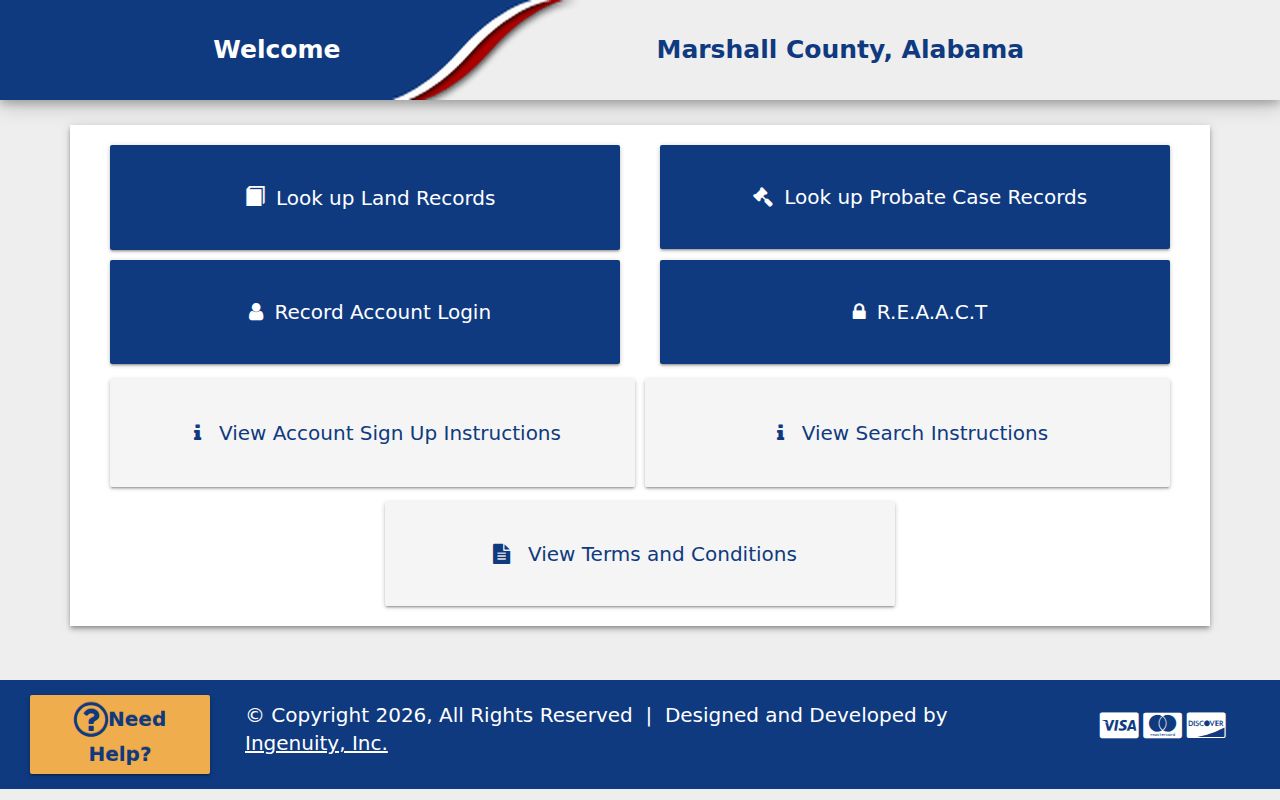
Marshall County uses a Landmark WEB system for online record searches. You can look up marriage licenses, probate cases, and deed records without leaving home. The system is free to use and does not require creating an account. Search results show index data and case numbers, but you will not see full document images online. After you find a record you need, you can order a copy by mail or pick it up at the office.
Marriage records at the probate court are open to anyone. You do not need to show that you are related to the people on the record. This makes marriage records one of the easiest places to start genealogy work. The court has marriage indexes going back to 1836. Early records may have some gaps due to fires and courthouse damage over the years.
| Address |
Marshall County Courthouse 424 Blount Avenue Guntersville, AL 35976 |
|---|---|
| Phone | (256) 571-7760 |
| Hours | Monday through Friday, 8:00 AM to 4:30 PM |
| Website | marshallcountyal.gov/probate-judge |
Marshall County Health Department
The Marshall County Health Department issues certified copies of vital records. They connect to the ViSION network, which is the state database for births, deaths, marriages, and divorces. You can get any Alabama vital record at this office. It does not matter which county the event happened in.
Access rules apply to vital records. Birth records less than 125 years old have restrictions. Only the person named, a parent, or legal guardian can get a copy. Death records less than 25 years old also have some limits. Records older than these cutoff dates open up for general genealogy use by anyone.
| Address |
Marshall County Health Department 4875 US Highway 431 Albertville, AL 35950 |
|---|---|
| Phone | (256) 582-3561 |
| Hours | Monday through Friday, 8:00 AM to 4:30 PM |
| Website | adph.org/marshall |
Walk-in requests often get same day service. Staff search the state database and print your record on site. Bring a valid ID and know the details of what you are looking for. If you are not the person named on the record, bring proof of your right to get it. You can also mail in a request with payment if you cannot visit in person.
Guntersville Public Library
The Guntersville Public Library has local history materials for Marshall County research. The collection includes old newspapers, city directories, and some family files. Staff can point you to sources that may help with your genealogy work. It is smaller than big city libraries but has materials specific to this area.
Resources at the library include:
- Local newspapers on microfilm
- Yearbooks from area schools
- Cemetery records and grave transcriptions
- Local history books about Marshall County
- Maps showing old property lines
Many libraries in Alabama offer free access to genealogy databases like Ancestry and HeritageQuest. Check with the Guntersville library about what online resources you can use while visiting. These paid databases are free at the library for anyone with a card.
| Address |
Guntersville Public Library 1240 O'Brig Avenue Guntersville, AL 35976 |
|---|---|
| Phone | (256) 571-7595 |
| Hours | Monday through Friday, 9:00 AM to 6:00 PM, Saturday 9:00 AM to 1:00 PM |
How to Search Records
You can search Marshall County genealogy records in several ways. Online searches work well for basic lookups. In-person visits let you see complete documents. Mail requests work when you already know what you need. Each method fits different situations.
Start with the Landmark WEB portal for probate records. Go to the Marshall County Probate Court website and look for the online records link. You can search by name and date range. The system shows index data for marriages, probate cases, and deeds. It costs nothing to use.
For vital records, you have three choices:
- Visit the county health department in Albertville in person
- Mail a request with payment to the health department
- Order online through VitalChek
VitalChek is the state's official online ordering service. You can order birth, death, marriage, and divorce records on their website. They charge a service fee on top of the state fee. Go to vitalchek.com or call 1-888-279-9888 to place an order. This works well if you live far away or cannot get time off to visit in person.
The Guntersville Public Library is good for local research. Staff know the area and can guide you to sources that do not show up online. Plan to spend a few hours if you are doing serious genealogy work. The Marshall County Historical Society may also have materials worth checking.
Online Access Options
Marshall County has decent online access for genealogy records. The Landmark WEB system covers probate, marriage, and deed records. It is free and open to anyone. Search results give you basic data, and you can note case numbers to order copies later.
Other online resources for Marshall County genealogy:
- AlacourtAccess for court records at pa.alacourt.com
- Alabama Department of Archives digital collection at digital.archives.alabama.gov
- FamilySearch free records at familysearch.org
- Ancestry subscription database at ancestry.com
- FindAGrave for cemetery records at findagrave.com
The Alabama Department of Archives and History has free digital records online. They have old newspapers, photos, and government documents. Some Marshall County records from the 1800s are in their collection. This is a good starting point for older research.
FamilySearch has free records with no subscription needed. They have indexed Alabama vital records, census data, and church records. Their collection grows as volunteers add new data. Create a free account to use all their tools. They have some indexed Marshall County marriage and death records.
In-Person Access
Visiting in person is the best way to see full records. Staff can help you search and explain what is available. You may find documents that do not appear in online indexes. Bring a notebook and a valid ID when you go.
The Marshall County Probate Court sits in the courthouse on Blount Avenue in Guntersville. The building is in the downtown area near Lake Guntersville. Go to the records room and ask staff for help. They can search the index and pull files for you to look at. You can take notes or order copies. Parking is available near the courthouse.
The health department is in Albertville, not Guntersville. This can catch people off guard. If you need vital records, drive to the Albertville office on US Highway 431. The building handles all vital records requests for the county. Call ahead to make sure they have what you need.
The Alabama Department of Archives and History in Montgomery is worth a trip for older records. Their research room has the best collection of early Alabama files. Some Marshall County probate records from the 1800s are stored there. The drive from Guntersville takes about two hours south on US-231.
Local Genealogy Tips
Marshall County sits in North Alabama along the Tennessee River. Lake Guntersville now covers what used to be river bottomland. Many families farmed this valley before TVA built the dam in 1939. If your ancestors lived in the lower areas, the dam and lake may have changed where records are kept.
Sand Mountain covers the eastern portion of Marshall County. This plateau area has its own communities and churches separate from the valley towns. Albertville is the largest city on Sand Mountain in Marshall County. If your family lived up on the mountain, check church records from that area separately from the valley congregations.
The county was formed in 1836 from parts of Blount and Cherokee Counties. If your family was here before 1836, check records in those two counties. Land grants and early tax lists may show up there instead of Marshall County. The Guntersville area was part of Cherokee land before removal, so some early records involve land grants from that transition period.
African American genealogy in Marshall County requires looking at Freedmen's Bureau records after the Civil War. The Alabama Department of Archives has these files. Church records from Black congregations are another source. Some go back to the years right after emancipation. These records can bridge the gap between slavery records and later vital records.
Many Marshall County families have Cherokee heritage from the early 1800s. The Dawes Rolls and other tribal records may help if you are researching Native American ancestry. The National Archives has these files. Check both federal and state sources for this type of research.
Cities in Marshall County
Marshall County has several cities and towns. None are large enough to have over 50,000 people. All of them use the Marshall County Probate Court for marriage records and the county health department in Albertville for vital records. There are no city-level vital records offices in Alabama.
Major communities in Marshall County include Guntersville (the county seat), Albertville (the largest city), Arab, Boaz, Grant, and Douglas. Albertville sits on Sand Mountain and is the commercial center for that part of the county. Guntersville is smaller but serves as the government center on the lake.
If you are researching a family from one of these towns, you will still get records from the county offices. Marriage, birth, death, and probate records are all handled at the county level. Court records for civil and criminal cases go through the 27th Judicial Circuit Court.
Nearby Counties
These counties border Marshall County. If your family lived near a county line, check records in both places. County borders have shifted over time, so an ancestor may show up in records from a neighboring county. Marshall County was carved from Blount and Cherokee Counties in 1836.
Morgan County lies to the west across the Tennessee River. Madison County is to the northwest and includes Huntsville. Jackson County borders to the north, and DeKalb County is to the east. Blount and Etowah Counties are to the south. Families often crossed these county lines for work, marriage, and church.